
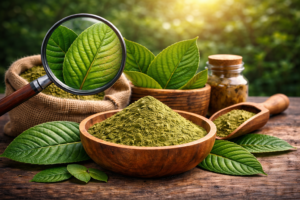
Green kratom comes from the leaves of Mitragyna speciosa harvested at an intermediate stage of maturity, when the leaf has fully developed its alkaloid content but has not yet begun to degrade or transform significantly. Although the term “green” has traditionally been associated with the color of the leaf’s midrib, in modern practice this name primarily reflects the result of the drying process.
After harvesting, the leaves intended for green kratom are usually dried under controlled conditions, typically indoors or in shaded, well-ventilated spaces. This type of drying avoids prolonged exposure to direct sunlight, which significantly reduces oxidation. As a result, the plant material retains a more natural color, closer to the original green of the fresh leaf.
From a chemical standpoint, this gentler processing allows for a relatively stable alkaloid composition, especially mitragynine, which is the main compound in kratom. With less oxidation or fermentation, fewer transformations occur into other secondary alkaloids. Therefore, green kratom is often considered an intermediate reference point within the processing spectrum.
Green kratom is characterized by moderate processing that prioritizes preserving the leaf’s natural state. Its color results from drying with low oxidation, which allows for a more stable chemical profile closer to the plant’s original state.
Good explanation of what ‘green’ actually means in kratom, clear and easy to understand. Learned something new today. Nice post
I like how this article focuses on the process rather than just the effects