Kratom production is not uniform throughout the year, and seasonal conditions play a fundamental role in the chemical composition and quality of Mitragyna speciosa leaves. Factors such as sunlight, temperature, humidity, and water availability directly influence plant metabolism, altering the biosynthesis of alkaloids and other secondary metabolites that define the chemical profile of the final product.
During the rainy season, for example, the availability of water and nutrients may promote rapid leaf growth, which can alter the relative concentration of alkaloids. Although physical yield increases, some research suggests that the proportion of compounds such as mitragynine or 7-hydroxymitragynine may be slightly diluted due to higher water content and accelerated plant metabolism. Conversely, during dry seasons, water stress and exposure to elevated temperatures may induce the plant to produce greater amounts of certain alkaloids as a defense mechanism, resulting in a different chemical profile.
Another relevant seasonal factor is the intensity of solar radiation. Light affects photosynthesis and the production of pigments such as chlorophyll, as well as the synthesis of secondary metabolites. Prolonged exposure to intense sunlight may promote partial oxidation and changes in phenolic compounds, which can also influence the color and stability of alkaloids.
Day length and growth cycles are other factors involved. Leaves harvested at different points during the season may vary both in size and in the concentration of active compounds. For this reason, experienced harvesters adapt their harvesting practices according to the time of year, selecting leaves with specific characteristics to optimize product consistency.
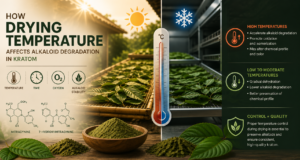
In addition, seasonal variation also affects subsequent drying and storage processes. Ambient humidity and temperature during drying influence the degradation kinetics of alkaloids, meaning that the same processing technique may produce different results depending on the season. This helps explain some of the variability between batches and highlights the need to adjust drying and preservation protocols to local climatic conditions.
From a scientific perspective, these fluctuations do not necessarily imply dramatic changes in the overall safety or composition of kratom, but they may be sufficient to alter the relative proportion of certain alkaloids and secondary metabolites. Understanding this dynamic is crucial for interpreting differences between batches and for planning storage and distribution strategies that minimize quality loss.
Overall, seasonal variation in kratom production reflects the complex interaction between plant biology and environmental conditions. Recognizing how these factors influence the concentration and stability of alkaloids helps explain the natural heterogeneity of the product and highlights the importance of agricultural and processing practices adapted to the plant’s annual growth cycle.