
Botanical products, including kratom, are naturally exposed to a wide range of environmental factors that can influence their final composition. Among these factors, the potential presence of heavy metals and other contaminants is one of the primary safety concerns. Understanding how these contaminants originate, how they are detected, and what their implications are is essential for properly evaluating the quality of this type of product.
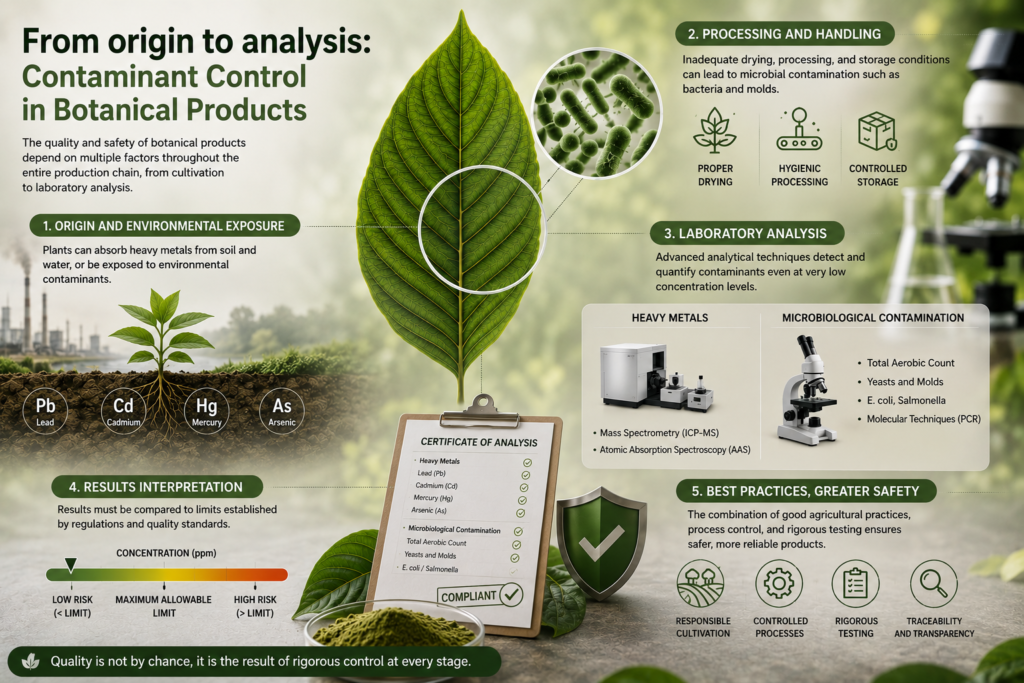
Heavy metals such as lead, cadmium, mercury, and arsenic may naturally occur in the soil where plants grow. Through root absorption processes, these elements can become incorporated into plant tissues and accumulate in different parts of the plant, including the leaves. This phenomenon is not unique to kratom but affects a wide variety of agricultural and botanical products, particularly in regions where soil conditions or industrial activity have altered the natural mineral composition of the environment.
In addition to environmental contamination, there are other potential sources of contaminants throughout the production chain. During harvesting, drying, and processing, plant material may come into contact with surfaces, equipment, or hygienic conditions that promote microbiological contamination. Bacteria, molds, and other microorganisms can develop if drying is insufficient or if the product is stored in high-humidity environments.
From an analytical perspective, these contaminants are detected using specialized techniques capable of measuring even very low concentrations. For heavy metals, methods such as mass spectrometry and atomic absorption spectroscopy provide highly sensitive identification and quantification of these elements. For microbiological contamination, laboratories use specific culture methods or molecular techniques to detect the presence of potentially harmful microorganisms.
It is important to note that the mere presence of trace amounts of heavy metals does not necessarily represent an immediate risk, as many of these elements occur naturally in the environment at low concentrations. However, accumulation above established thresholds may pose toxicological concerns, making appropriate limits and quality controls essential.
Contaminant control does not rely solely on final product testing but also on the practices implemented throughout the entire supply chain. Selecting suitable cultivation areas, applying hygienic processing methods, and storing products under controlled conditions are key factors in minimizing potential risks. In this context, traceability and transparency become fundamental elements in ensuring product quality.
From the consumer’s perspective, Certificates of Analysis (COAs) that include contaminant testing provide an additional layer of confidence, although it is important to interpret these data correctly. Not all standards are identical, and acceptable limits may vary depending on the applicable regulations or the laboratory performing the analysis.
Overall, the potential presence of heavy metals and other contaminants in botanical products should be understood as a manageable risk rather than an unavoidable characteristic. The combination of good agricultural practices, process control, and laboratory testing significantly reduces these risks and helps ensure safer products. This approach is essential for moving toward a more professional and transparent market, where quality is determined not only by appearance or origin but also by verifiable data and scientifically based criteria.