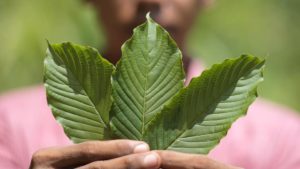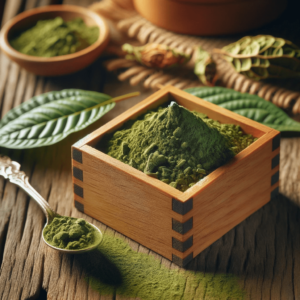
Green kratom can be defined as an intermediate processing stage in which a balance is sought between preserving the original phytochemical matrix and the controlled occurrence of post-harvest biochemical transformations. After harvesting, generally from leaves at functional maturity, the plant tissue undergoes a brief wilting phase during which endogenous enzymatic activity persists, especially that associated with oxidative enzymes and residual metabolic pathways. This stage allows for limited intracellular reorganization without inducing significant degradation of sensitive compounds. Subsequently, drying is carried out under conditions of low irradiation and moderate temperatures, with controlled relative humidity and airflow, which restricts oxidation kinetics and minimizes photoinduced degradation. From a physicochemical perspective, this drying regime favors chlorophyll retention and reduces the conversion of indole alkaloids, maintaining a profile relatively close to the native state. However, even under these conditions, variations in the fraction of minor secondary metabolites can occur, suggesting that small differences in process parameters can have disproportionate effects on the final composition.
In contrast, red kratom represents a system subjected to more extensive post-harvest transformations, in which advanced oxidation phenomena and potential biotransformation processes associated with partially controlled microenvironments predominate. After harvesting, the leaves are typically exposed to direct sunlight for extended periods, which increases tissue temperature and accelerates both photochemical and thermal reactions. Additionally, in certain processing methods, the plant material undergoes accumulation or partial confinement phases that generate oxygen, humidity, and temperature gradients, favoring quasi-fermentative conditions. Under these scenarios, both oxidative enzymatic pathways and processes mediated by environmental microbiota can be activated, leading to a progressive modification of pigments and the formation of secondary oxidation products. At the molecular level, these changes involve structural transformations in pre-existing alkaloids, including possible rearrangements, partial oxidations, or selective degradations, although the specific mechanisms are not yet fully understood. The inherent heterogeneity of these processes translates into high inter-batch variability, which reinforces the idea that the “red” category corresponds to a continuum of oxidation states rather than a discrete or reproducible chemical profile.
White kratom, on the other hand, is characterized by a processing approach focused on the rapid stabilization of the plant material through the suppression of enzymatic activity and the limitation of oxidative processes. In this case, the leaves are dried almost immediately after harvesting, minimizing the wilting phase and, therefore, the window of opportunity for endogenous biochemical transformations. Drying is typically carried out under conditions of low light exposure and high ventilation, which increases the rate of water removal and shifts the system toward an equilibrium state in which enzymatic activity is kinetically inhibited. This type of processing better preserves the structural integrity of the tissues and limits pigment degradation, resulting in a lighter color. From a systems chemistry perspective, white kratom can be interpreted as a product in which the rate of dehydration acts as the dominant variable, restricting the extent of molecular transformations and maintaining a composition closer to its initial state. However, the final composition remains strongly influenced by pre-processing variables such as leaf age, genetic profile, and soil and climate conditions.
Taken together, the analysis of these three types reveals that the differences observed in commercial kratom are primarily due to variations in post-harvest processing parameters, rather than to clearly defined taxonomic or genetic divergences. Factors such as oxygen availability, radiation intensity, temperature, humidity, and the duration of each stage determine the kinetics of the reactions involved and, consequently, the final composition of the material. From this perspective, the green, red, and white categories can be interpreted as processing phenotypes within a dynamic chemical system, in which multiple variables interact nonlinearly. This approach explains the frequent overlap of chemical profiles between visually distinct samples and underscores the need to consider processing as a central determinant in any attempt at rigorous kratom characterization.